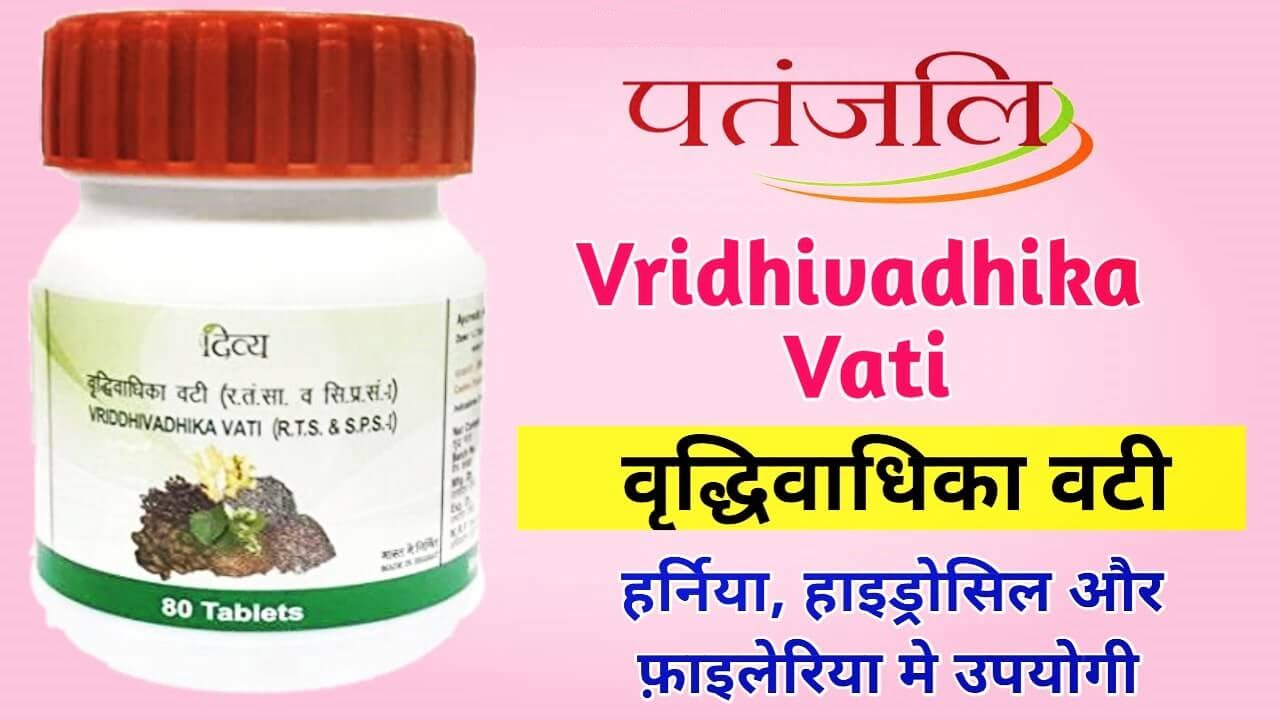
Vridhivadhika Vati is a herbo-mineral Ayurvedic tablet traditionally used for inguinal hernia, intestinal hernia and hydrocele (vriddhi). The Patanjali Divya version contains purified mercury, sulphur and several metal bhasmas along with ginger, pepper, pippali, haritaki and amla. A hernia is a physical defect that often needs a surgeon assessment, so this guide stresses safe use.
Last reviewed: November 2026. General information only, not medical advice. Contents and strengths can differ by manufacturer and batch, so always check your pack and follow your doctor.
Quick Facts
| Manufacturer | Divya Pharmacy, Haridwar (marketed by Patanjali Divya Pharmacy) |
| Type | Herbo-mineral Ayurvedic tablet (OTC) |
| Pack | 160 tablets |
| Label dose | 1-2 tablets twice daily after meals with lukewarm water |
| Traditional use | Hernia, hydrocele, vata balance |
Patanjali Divya Vridhivadhika Vati Composition
- Shuddha parad (purified mercury)
- Shuddha gandhak (purified sulphur)
- Loha, vanga, tamra, kansya, hartal, nila thotha, shankh and kapardak bhasmas
- Sonth (ginger), black pepper, long pepper, haritaki and amalaki
- Quantities are not listed on the pharmacy page
What Is Patanjali Divya Vridhivadhika Vati Used For?
- Inguinal and intestinal hernia (traditional use)
- Hydrocele
- Vata and kapha balance (traditional claim)
How It Works
This is a classical mineral formulation. Its uses are traditional, and listings do not cite clinical evidence. A tablet cannot repair a hernia defect, so this product should not replace a surgeon assessment.
How to Take It
Label dose is 1 to 2 tablets twice daily after meals with lukewarm water, or as advised by a healthcare practitioner. Do not exceed the recommended dose.
Possible Side Effects
Pharmacy pages list no side effects. Mineral-based products can carry risks if misused, such as:
- Stomach upset or metallic taste
- Headache or nausea
- Skin rash
- Heavy-metal related effects with overuse or poor-quality products
Stop and seek urgent help for severe abdominal pain, vomiting, a hernia that becomes hard, painful, red or cannot be pushed back, or signs of poisoning such as tremor or severe weakness.
Precautions and Who Should Be Careful
- Get a hernia examined by a surgeon, because a strangulated hernia is an emergency
- Use under the guidance of a qualified Ayurvedic practitioner
- Avoid in pregnancy, breastfeeding, children, and kidney or liver disease unless prescribed
- Do not exceed the dose or use for long periods without supervision
- Buy only from a licensed, reputable manufacturer
- Store in a cool, dry place away from sunlight and children
Key Points to Remember
- A herbo-mineral formula containing purified mercury, sulphur and metal bhasmas
- Label dose is 1 to 2 tablets twice daily after meals
- It does not repair a hernia defect
- A painful, hard hernia is an emergency
When to Contact a Doctor
- You have a lump in the groin or scrotum
- Pain, redness or a hard swelling that cannot be pushed back
- Nausea or vomiting with a hernia
- You have kidney or liver disease, or are pregnant
Practical Tips
- Avoid heavy lifting and straining
- Prevent constipation with fibre and water
- Maintain a healthy weight
- Wear support only if your doctor advises
Questions to Ask Your Doctor or Pharmacist
- Does my hernia need surgery?
- Is a mineral-based Ayurvedic tablet safe for me?
- What tests monitor safety during long use?
- What symptoms mean I must come to the hospital?
Frequently Asked Questions
What is Vridhivadhika Vati used for?
It is traditionally used for inguinal hernia, intestinal hernia and hydrocele.
Can Vridhivadhika Vati cure a hernia?
No. A hernia is a physical defect and often needs a surgeon assessment, so the tablet should not replace medical care.
What is the dose?
The label suggests 1 to 2 tablets twice daily after meals with lukewarm water, or as advised by a practitioner.
Does it contain metals?
Yes. It contains purified mercury, sulphur and metal bhasmas, so use it only under a qualified practitioner and buy from a licensed brand.