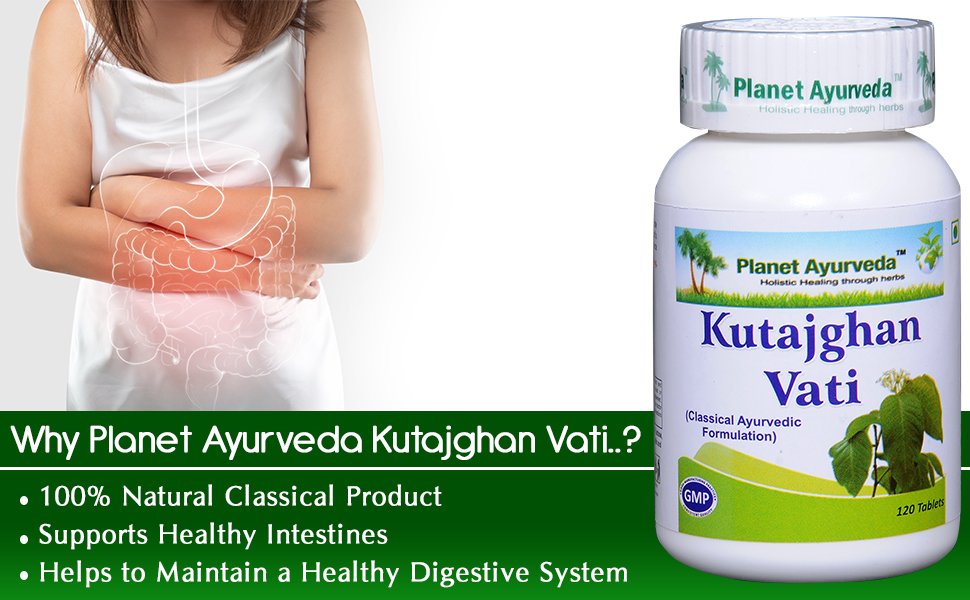
Kutajghan Vati is an Ayurvedic tablet from Patanjali Divya Pharmacy traditionally used for loose motions, dysentery-like complaints and irritable bowel symptoms. Each tablet has two ingredients, kuda bark extract and atis root. This guide explains the facts and when you must see a doctor instead of self-treating.
Last reviewed: November 2026. General information only, not medical advice. Contents and strengths can differ by manufacturer and batch, so always check your pack and follow your doctor.
Quick Facts
| Manufacturer | Divya Pharmacy, Haridwar |
| Type | Ayurvedic tablet (OTC) |
| Pack | 80 tablets |
| Label dose | 2 to 4 tablets, three to four times daily with water |
| Traditional use | Diarrhoea (atisaara) and grahani (IBS-like symptoms) |
Patanjali Divya Kutajghan Vati Composition
- Kuda (Holarrhena antidysenterica) bark extract 400 mg
- Atis (Aconitum heterophyllum) root fine powder 100 mg
What Is Patanjali Divya Kutajghan Vati Used For?
- Loose motions and diarrhoea (traditional use)
- Irritable bowel type symptoms (grahani)
- General digestive discomfort
- Support for regular bowel movements
How It Works
Kuda is a traditional Ayurvedic herb used for loose stools and dysentery, and atis is traditionally used for digestion. These claims are traditional, and listings do not cite clinical trials.
How to Take It
Label dose is 2 to 4 tablets three to four times daily with water, or as directed by a physician. Drink plenty of fluids and oral rehydration solution (ORS) while you have diarrhoea.
Possible Side Effects
Pharmacy pages list no side effects. Possible effects may include:
- Constipation if taken too long
- Mild stomach upset
- Allergic reaction in sensitive people
Seek medical care urgently for blood in stool, high fever, severe dehydration, repeated vomiting or diarrhoea lasting more than 2 days.
Precautions and Who Should Be Careful
- Do not rely on it alone for severe diarrhoea, especially in children, older adults or pregnant women
- Use ORS and fluids to prevent dehydration
- Atis is a herb that should be used only at the label dose
- Ask a doctor before use in pregnancy or breastfeeding
- Do not exceed the recommended dose
- Keep tightly closed, in a cool, dry, dark place away from children
Key Points to Remember
- Two ingredients: kuda bark extract 400 mg and atis root 100 mg
- Label dose is 2 to 4 tablets, three to four times daily
- Hydration and ORS matter more than any tablet
- See a doctor if diarrhoea lasts over 2 days or has blood
When to Contact a Doctor
- Blood or mucus in stool
- Fever above 38 C
- Signs of dehydration: dry mouth, very little urine, dizziness
- Diarrhoea in infants, older adults or pregnant women
Practical Tips
- Sip ORS often
- Eat light food such as khichdi, curd and banana
- Wash hands and drink boiled or filtered water
- Avoid spicy and oily food until stools settle
Questions to Ask Your Doctor or Pharmacist
- Do I need a stool test?
- Is this safe along with my other medicines?
- How long should I continue?
- When should I stop and come back?
Frequently Asked Questions
What is Kutajghan Vati used for?
It is traditionally used for diarrhoea, dysentery-like complaints and IBS-type symptoms.
What does Kutajghan Vati contain?
Each tablet contains 400 mg kuda bark extract and 100 mg atis root powder.
What is the dose?
The label suggests 2 to 4 tablets three to four times daily with water, or as directed by a physician.
Is Kutajghan Vati enough for severe diarrhoea?
No. Use ORS and see a doctor if there is blood, fever or diarrhoea lasting over 2 days.
Sources
1mg Patanjali Divya Kutajghan Vati · Apollo Pharmacy listing